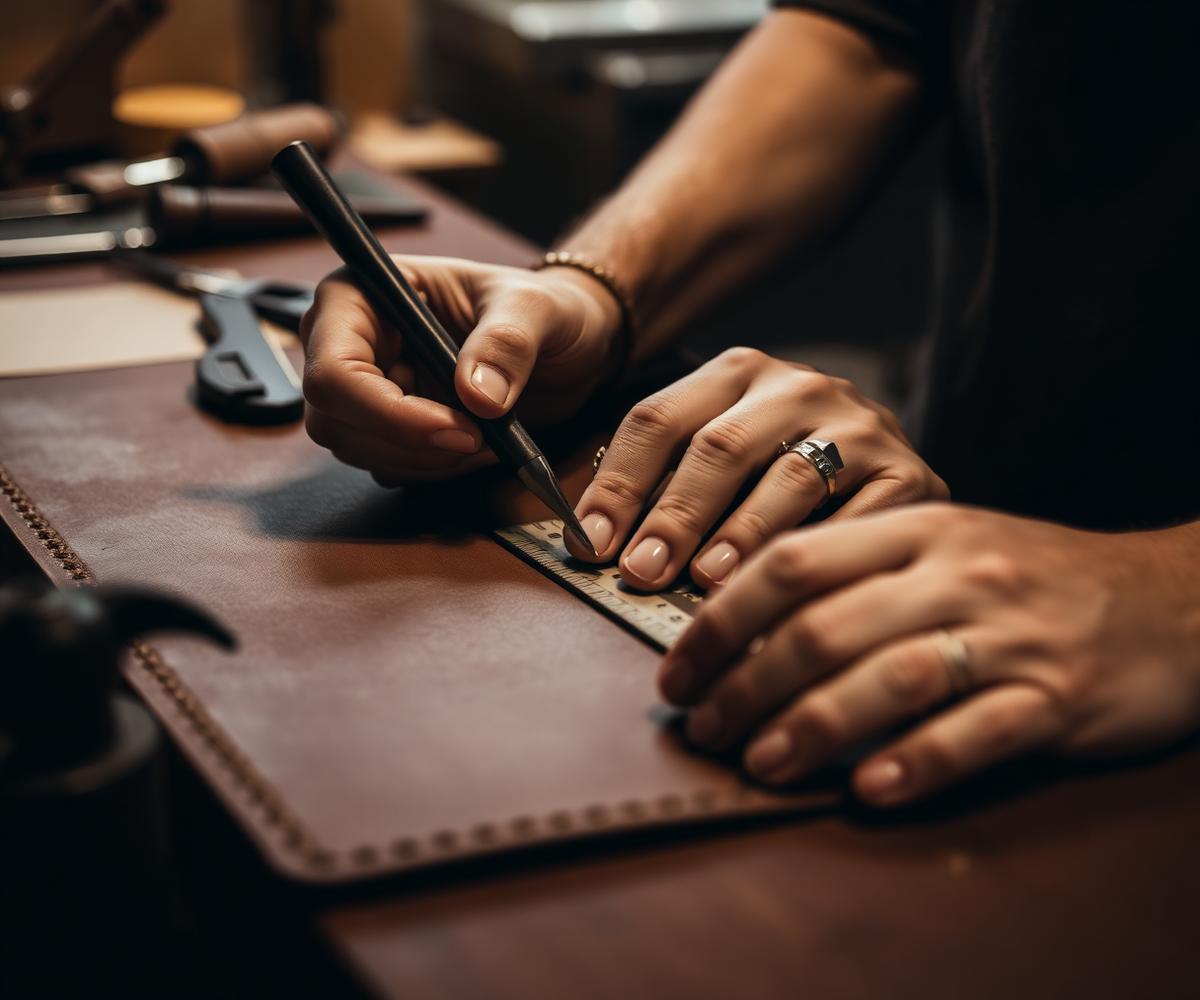

The enduring competitive advantage of Italian leather goods — an ecosystem of craftsmanship, tanneries, specialist components and flexible production.
Executive Summary
For decades, Italy has been recognised as the global benchmark for premium leather goods. Despite rising competition from lower-cost regions and margin pressure, Italy remains uniquely positioned within the premium accessories industry.
Its advantage is not based on lower costs — it is based on an ecosystem that integrates skilled craftsmanship, high-quality leather suppliers, specialist component manufacturers, advanced production techniques, flexible manufacturing, design expertise, quality control and decades of accumulated know-how.
More Than a Manufacturing Country
Italy is one of the world's most complete leather-goods ecosystems. Within a relatively small geographic area, manufacturers have access to tanneries, hardware specialists, pattern makers, sampling workshops, leather suppliers, packaging companies, QC specialists and logistics providers. This concentration enables faster collaboration and higher consistency.
Craftsmanship Built Over Generations
Many Italian leather manufacturers are family-owned businesses with decades of experience. Skills such as pattern making, leather cutting, edge painting, stitching, assembly and finishing have traditionally been passed from one generation to the next.
Leather Quality
Italy remains home to internationally respected tanneries producing full-grain, top-grain, pebbled, vegetable-tanned, suede, nubuck and printed/embossed finishes. Italian tanneries are recognised for colour consistency, softness, durability, finish quality, innovation and environmental standards.
Why Premium Brands Continue to Manufacture in Italy
High craftsmanship standards, strong quality control, reliable specialist suppliers, short development cycles, flexible production, design expertise and luxury credibility. For premium retailers, "Made in Italy" continues to carry strong commercial value when supported by genuine manufacturing quality.
The Role of Technology
Today's factories combine CAD pattern development, digital cutting, laser marking, precision stitching equipment, ERP production planning and quality inspection systems with experienced craftspeople maintaining finishing quality.
Flexibility Matters
Many manufacturers specialise in medium-sized collections, seasonal capsules, private-label programmes, limited editions and fast replenishment — enabling retailers to reduce inventory risk while responding quickly to demand.
The Importance of Private Label
Italian manufacturers support branding, packaging customisation, material selection, colour adaptation, hardware variations and flexible order quantities. Retailers can customise commercially proven handbag structures rather than creating every style from scratch.
Italy vs. Low-Cost Manufacturing
| Italy | Low-Cost Manufacturing |
|---|---|
| Premium craftsmanship | Lower labour cost |
| Strong leather expertise | High-volume production |
| Flexible private label | Standardised production |
| Shorter development cycles | Longer communication chains |
| High perceived value | Cost-led positioning |
| Strong luxury reputation | Volume-focused strategy |
The most important question is not "which option is cheaper?" — it is "which option creates greater long-term value for my customers and my business?"
Common Misconceptions
"Italian production is only for luxury brands." Italian manufacturers produce across multiple price points, from accessible premium to luxury.
"Italian manufacturing cannot be flexible." Many specialist factories are known for responsiveness, seasonal capsules and private-label programmes.
"Only very large retailers can source from Italy." Many manufacturers work successfully with growing brands, department stores and niche retailers.
Conclusion
Italy continues to lead premium leather manufacturing not because it offers the lowest production cost, but because it combines craftsmanship, technical expertise, quality materials and an integrated manufacturing ecosystem that few regions can replicate.